
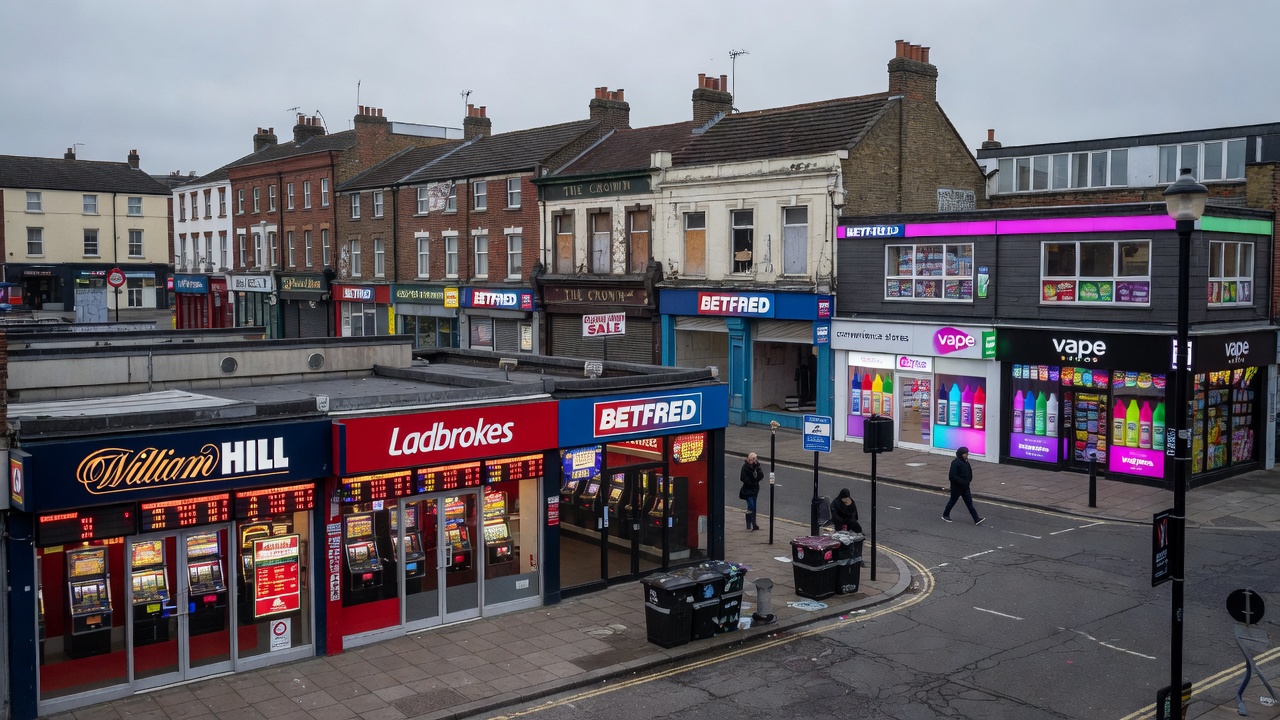
Town centres across England are about to get a new gatekeeper. Under measures announced by the Prime Minister on Tuesday 11 August, local authorities will be handed stronger legal tools to refuse new betting shops, adult gaming centres and vape stores, reversing decades of planning rules that left councils largely powerless to stop them clustering on struggling high streets.
Why the "Aim to Permit" rule mattered
At the centre of the change is the Gambling Act's "aim to permit" principle, which for years has obliged councils to approve new betting shop licences unless they could demonstrate very specific grounds for refusal. In practice, this made it extremely difficult for local authorities to resist the spread of betting premises even where residents raised repeated objections. Scrapping the presumption in favour of approval shifts the balance of power toward councils and the communities they represent, giving them genuine discretion rather than a legal obligation to say yes.
Adult Gaming Centres - venues offering round-the-clock access to slot and fruit machines - will face a parallel change. From the start of next year, AGCs will require planning permission for the first time, bringing them into line with the scrutiny already applied to many other types of commercial premises.
Vape shops brought under planning control
Vape retailers have expanded rapidly in recent years, often filling units left vacant by pubs, bars and independent shops. Because they have not previously required planning permission, local authorities had no formal mechanism to object to their location, density or proximity to schools. That changes under the new rules: vape shops will need planning consent to open, and the definition of what counts as a vape shop will be tightened so that outlets cannot sidestep the rules by rebranding as general convenience stores.
The policy responds to a broader concern about the composition of high streets. Analysis cited by the Centre for Social Justice points to a sharp fall in the number of pubs and bars since 2016, alongside a marked rise in vape and tobacco retailers - a shift that has changed the character of many town centres and, campaigners argue, weakened the sense of community that pubs and other social venues once provided.
Tougher enforcement against rogue operators
Beyond planning reform, the government is extending the maximum length of Closure Orders from six months to twelve. This gives police and local authorities significantly more time to investigate premises suspected of links to organised crime - including illegal vape retailers and unlicensed barber shops often cited as fronts for money laundering - without the business reopening before an investigation concludes.
This builds on a separate £30 million enforcement drive targeting money laundering, tax evasion and illegal working, backed by raids and shop closures. Officials have also pointed to specific areas of concern: in the London Borough of Brent, more than 80 gambling venues currently operate, including ten betting shops within a ten-minute walk of each other in Harlesden - the kind of clustering the new powers are explicitly designed to prevent.
What it means for operators and local economies
For betting and gaming operators, the practical effect is a slower, more contested path to opening new premises, particularly in areas where councils and residents already feel over-saturated. Firms will need to engage more seriously with local consultation processes rather than relying on a near-automatic right to a licence. For vape retailers, the shift to planning permission introduces a layer of regulatory friction that other high street businesses have long had to navigate.
The reforms sit alongside efforts to make high streets more visually coherent, including new design guidance on shopfronts and signage, and a 20% business rates cut for pubs, social clubs and live music venues - a change partly funded by reviewing rate reliefs currently available to businesses, including vape shops, that ministers argue contribute little to local community life. Together, the measures mark a deliberate rebalancing of who decides what a high street looks like: not national licensing defaults, but the councils and residents who live with the consequences.