
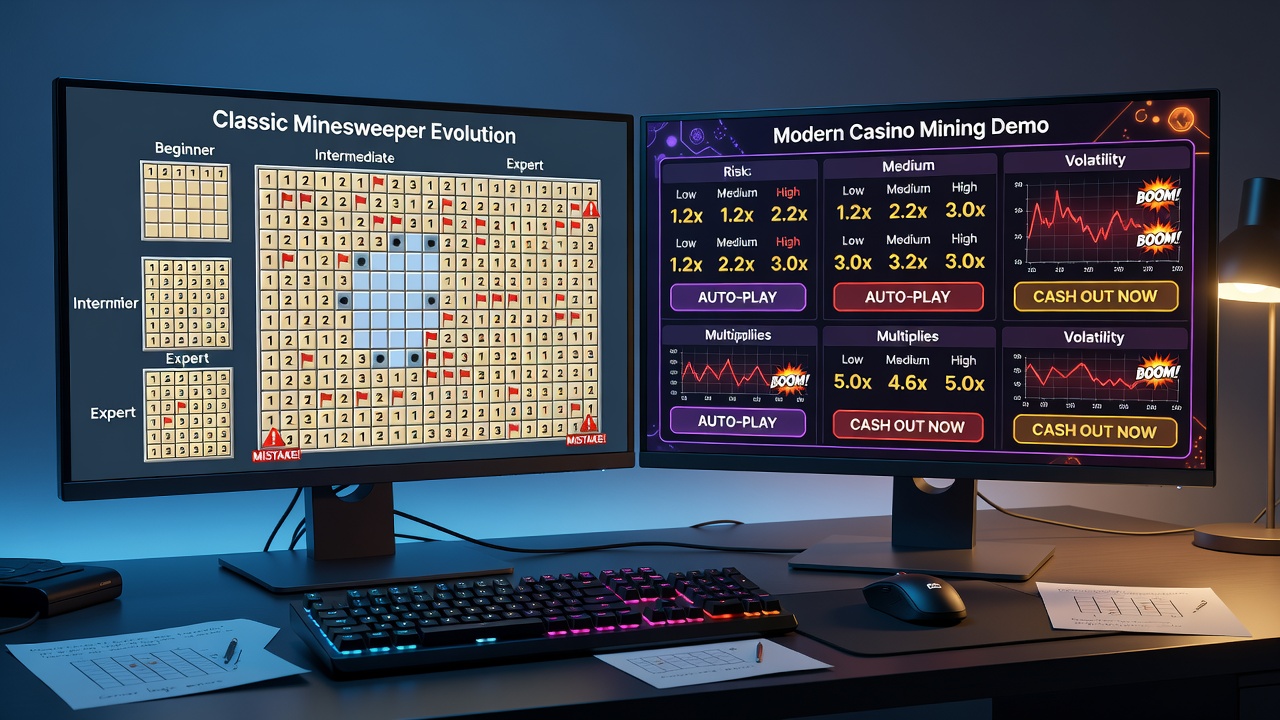
A single grid of hidden tiles has kept players occupied for more than three decades, and the format shows no sign of fading. What started as a simple logic puzzle bundled with office computers has split into two distinct genres: the classic deduction game where you avoid mines through careful reasoning, and the gambling-style variant where you tap tiles and hope your nerve holds longer than your luck. Both trace back to the same core idea, yet they reward completely different skills.
Anyone curious about either version can now test it without spending a cent. A mines game demo strips away the financial risk while keeping every mechanic intact - the same grid, the same probability curve, the same tension with each click. Sites offering a free mines demo let you learn tile patterns, practice risk management, or simply relax with a puzzle, and if you want to see how a modern version handles multipliers and cash-out timing, you can find out more before ever registering an account. That accessibility matters because the two genres attract very different audiences with different reasons for playing.
This piece breaks down what these demos actually offer, how the logic puzzle differs from the casino format, and what to look for before committing real time or money to either one.
What Is a Mines Game Demo
The Core Concept Explained
A mines game demo is a no-stakes version of a tile-clearing game where hidden mines sit beneath a grid and the player's job is either to avoid them (in the puzzle format) or to reveal safe tiles for increasing rewards before hitting one (in the casino format). Because no money changes hands, the demo exists purely to let players understand mechanics, pacing, and risk before deciding whether to play for real.
Puzzle Version vs Casino Version
The original Minesweeper is a logic exercise: numbers on revealed tiles tell you how many mines surround them, and skilled players use deduction to clear the board with zero guessing in many spots. The casino adaptation removes the numeric clues and replaces skill with probability - every tile you reveal increases a multiplier, and the game ends the moment you hit a mine. A minesweeper demo teaches pattern recognition and logic; a mining game demo, by contrast, teaches bankroll discipline and when to stop.
Why Demos Exist at All
Developers include free trial modes for a straightforward reason: trust. Nobody wants to deposit money into an unfamiliar platform without seeing how the interface behaves, how fast rounds resolve, or whether the randomization feels fair. An online mines demo answers those questions upfront, functioning as both a tutorial and a filter that separates casual curiosity from serious interest.
How Minesweeper Demos Work
Grid Size and Mine Density
Classic Minesweeper demos typically offer three settings: a small beginner grid with few mines, a medium intermediate board, and a large expert grid packed with hidden mines. Density changes the entire strategy - a sparse board rewards patient deduction, while a dense one forces educated guessing even from skilled players.
Reading the Numbers
Every revealed tile displaying a number indicates exactly how many mines touch it, including diagonals. Mastering this game means learning to cross-reference overlapping numbers until safe tiles become obvious rather than guessed.
Common Mistakes New Players Make
- Clicking corners first instead of the center, where more information typically opens up early
- Ignoring flag markers, which help track suspected mines and prevent accidental clicks
- Rushing through the endgame, where a single misclick after minutes of careful play ends the round
How Mining Game Demos Work
The Multiplier Mechanic
In the casino-style format, each safe tile revealed pushes a multiplier upward. Players choose when to cash out, balancing greed against the rising odds that the next tile hides a mine. This is the defining tension of the genre - unlike the puzzle version, there's no way to deduce safety through logic alone.
Adjustable Risk Settings
Most mining game demo platforms let players set how many mines populate the grid before each round. Fewer mines mean safer, slower multiplier growth; more mines mean faster growth paired with dramatically higher risk. Testing both extremes in a free mines demo reveals which pace suits your temperament before any money is involved.
Auto-Play and Cash-Out Strategies
Many versions include automated settings that reveal a preset number of tiles or stop at a target multiplier. Practicing these settings in demo mode helps players build a consistent strategy rather than making emotional decisions mid-round, which is where most losses in the real-money version originate.
Benefits of Playing the Free Version First
Learning Without Financial Risk
The obvious advantage of an online mines demo is that mistakes cost nothing. New players can misjudge risk levels, test aggressive multiplier settings, or simply lose repeatedly while building intuition for how the odds actually behave over dozens of rounds.
Comparing Platforms Before Committing
Interface speed, visual clarity, and round pacing vary between providers. A free mines demo lets you compare several platforms side by side and settle on the one whose rhythm and presentation actually suit you, rather than committing funds to the first option you encounter.
Understanding Volatility Patterns
Extended demo play reveals how streaky the game can be - long stretches without a mine followed by sudden, early losses. Recognizing this volatility in a risk-free setting prepares players for the emotional swings that come with real-money rounds.
Choosing the Right Platform for Your Demo
Checking for Verified Randomization
Reputable platforms disclose their randomization method or use provably fair systems that let players verify outcomes weren't manipulated. This matters even in demo mode, since a rigged free trial gives a false impression of the real-money experience.
Interface and Speed Considerations
A cluttered interface slows decision-making, which matters in a game where timing the cash-out is everything. Testing an online mines demo on both desktop and mobile reveals whether the layout holds up under different screen sizes and connection speeds.
Reading Platform Reputation
Before moving from demo to deposit, check independent reviews, payout histories, and community discussion. A polished demo means little if the platform behind it has a poor track record with withdrawals or customer support.
From Demo to Real Money: What Changes
The Psychological Shift
Playing with real currency introduces stress that no demo can replicate. Decisions that felt easy in practice - cashing out at a modest multiplier instead of pushing further - become harder once actual money sits on the line.
Setting Limits Before You Start
Players who transition successfully from a mines game demo to real-money play typically set a strict loss limit and a target win beforehand, then stick to both regardless of how the session unfolds. This single habit prevents most of the damage that comes from chasing losses.
Recognizing When to Step Back
Demo experience teaches the mechanics, but only real sessions teach self-control. If a player notices themselves increasing mine density or bet size after a loss to "win it back," that's the clearest signal to stop and return to demo mode until the impulse passes.
Frequently Asked Questions
Is a mines game demo exactly the same as the real-money version?
Mechanically, yes - the grid, multiplier growth, and mine placement logic work identically. The only difference is that demo credits carry no withdrawal value, so outcomes have no financial consequence.
Can strategy actually improve results in the casino-style mining game?
Strategy affects risk management and cash-out timing, but it cannot influence which tiles hide mines, since that's determined by random number generation. Skilled players minimize losses and lock in gains more consistently, but they cannot beat the underlying odds long-term.
Why do some minesweeper demos feel harder than others?
Difficulty depends on grid size and mine density, both of which vary by platform default settings. A demo with a high mine-to-tile ratio will force more guessing, even for experienced players who rely on deduction.
Do free demos require an account or personal information?
Most reputable platforms let you access a free mines demo instantly, with no registration or personal details required. Account creation typically becomes necessary only when you choose to switch to real-money play.
How long should someone practice in demo mode before playing for real?
There's no fixed number, but playing enough rounds to understand how quickly multipliers rise relative to mine density is a reasonable benchmark. Once you can predict roughly when the risk outweighs the potential reward, you're ready to make an informed decision about real-money play.
Are mobile versions of these demos as reliable as desktop ones?
Quality varies by platform, but well-built mobile versions replicate the desktop experience closely, including speed and randomization. Testing both versions during the demo phase is the best way to confirm consistency before committing to one format.