
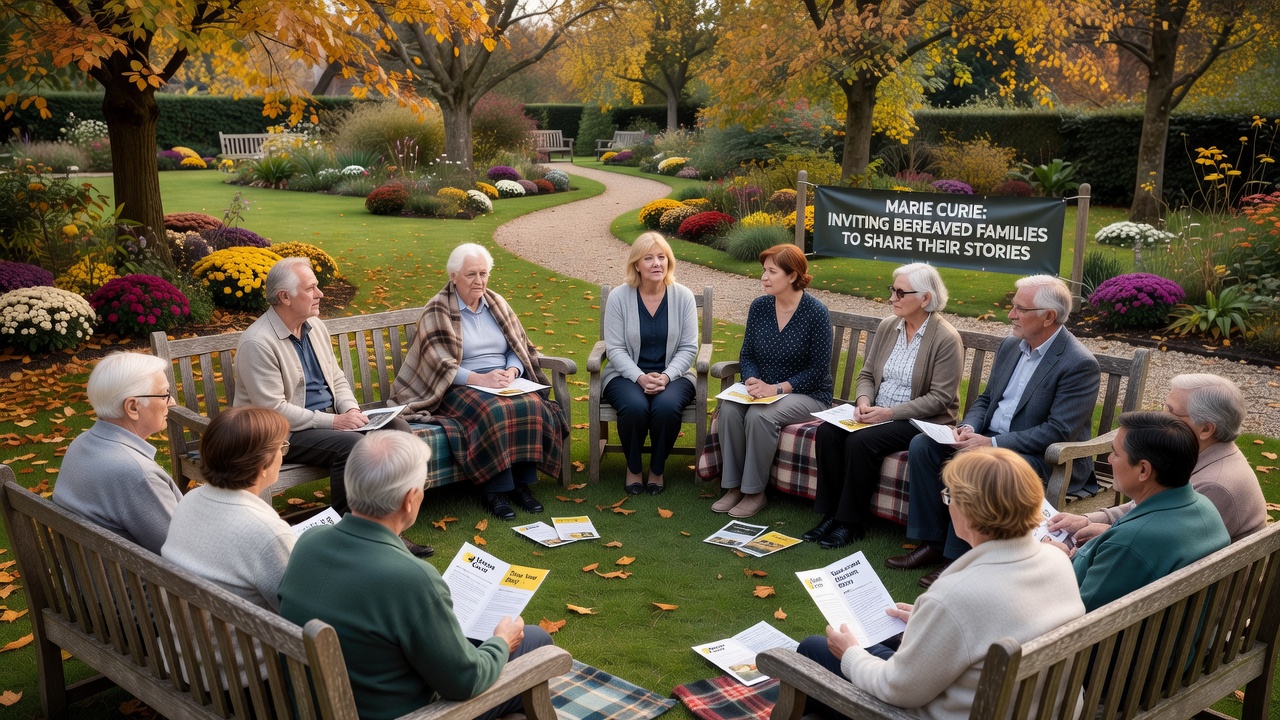
Marie Curie is asking people affected by terminal illness, caregiving or bereavement to come forward and share their experiences. The charity says first-hand accounts can shift public attitudes, challenge stigma around death and dying, and help others understand what end-of-life support actually looks like in practice.
Why personal testimony matters to charities
Charities working in health and end-of-life care have long relied on lived experience to communicate what statistics alone cannot. A diagnosis, a hospice stay or the weeks following a death are difficult to convey through policy documents or funding appeals. Personal stories fill that gap. They give organisations like Marie Curie a way to explain, in concrete terms, what their nurses and support services do, and why continued funding and volunteering matter.
Georgina, whose husband Neil was cared for by Marie Curie, described the experience of receiving that care as "the most incredible gift," adding that sharing the story might allow someone else to receive the same support. That sentiment reflects a common pattern among people who choose to speak publicly about grief: many describe the act of sharing as meaningful in itself, separate from any wider campaigning outcome.
How the process works
Marie Curie is not asking for polished narratives. The invitation covers a wide range of situations - someone living with a terminal illness themselves, a family member currently caring for a dying relative, or someone recently bereaved. Participants complete a short form with as much detail as they feel comfortable providing. A member of the charity's Stories team then follows up directly if more information is needed.
Importantly, contributors retain control throughout. Marie Curie states clearly that no part of anyone's story is published or broadcast without prior consent. This matters because the ways a story might be used vary considerably:
- Website features or social media posts describing personal experience
- Fundraising appeals built around a real case
- Short media interviews with journalists
- Filmed contributions or public comment on a topical issue or campaign
Each of these carries a different level of public exposure, and the charity's approach of separate, explicit consent for each use is a standard safeguard when working with people discussing sensitive personal loss.
The wider purpose behind collecting these accounts
Beyond individual charity communications, this kind of testimony feeds into something larger: keeping end-of-life care visible as a political and public priority. Palliative and hospice care competes for attention and funding alongside many other pressing health needs, and it rarely generates headlines on its own. Real accounts of what good end-of-life support looks like - or where it falls short - give policymakers and the public a clearer picture than service statistics can offer alone.
For families considering whether to take part, the calculation is personal. Some find that recounting a difficult period publicly helps them process it; others prefer privacy. Marie Curie's approach appears designed to accommodate both, offering a low-commitment first step through the form rather than an immediate request for a full public interview.