
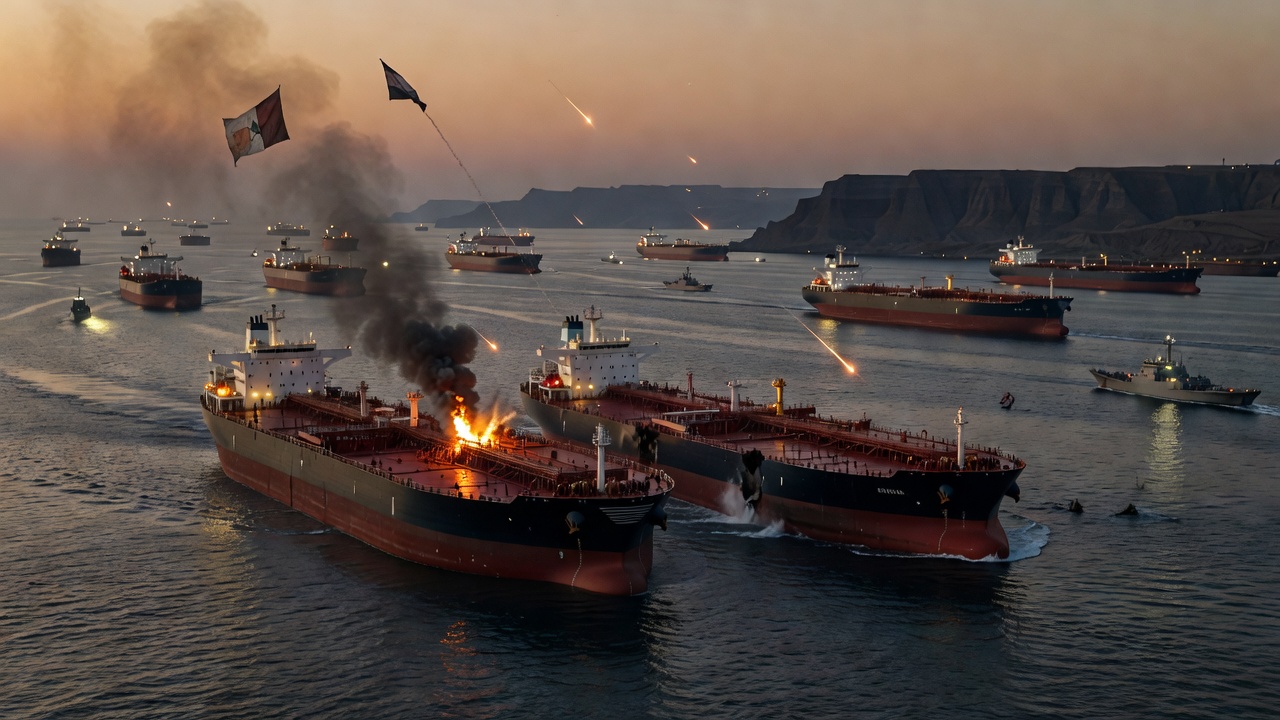
Two oil tankers were struck by unidentified projectiles while passing through the Strait of Hormuz, a waterway through which a vast share of the world's seaborne crude moves daily. The UK Maritime Trade Operations agency reported that one vessel suffered a small fire and lost power after being hit, while a second crude carrier was struck on its port side near Omani waters. No injuries or environmental damage have been confirmed, but the incident lands at a moment when tensions involving Iran and broader anxieties over Gulf shipping security were already running high.
Why the Strait Matters So Much
The Strait of Hormuz is barely 33 kilometers wide at its narrowest point, yet it serves as the single most important chokepoint for global oil flows. Tankers moving crude from Saudi Arabia, Iraq, the United Arab Emirates, Kuwait and Qatar have no practical alternative route to open water. Any disruption there, even a minor one, tends to ripple through energy markets because traders price in the risk of wider escalation rather than just the immediate damage. That sensitivity is why incidents affecting just two vessels, with no casualties and no spill, still register as significant events for insurers, shipowners and governments alike.
A Pattern, Not an Isolated Event
This is not the first time tankers have come under attack in or near these waters. Previous years have seen limpet mine incidents, drone strikes and vessel seizures in the same corridor, often tied to the broader standoff between Iran and Western powers, or to regional proxy conflicts. Each episode tends to prompt the same sequence: naval forces increase patrols, shipping insurers reassess war-risk premiums for the region, and some operators reroute or pause voyages until the picture clarifies. The identity of the attacker in this latest case has not been established, which itself adds to the uncertainty, since responsibility in these waters has historically been contested or denied by all sides.
Commercial and Market Consequences
For shipping companies, attacks of this kind translate directly into higher operating costs. War-risk insurance for vessels transiting the Gulf can rise sharply after such incidents, and some owners may demand escort arrangements or alternative scheduling. For energy markets, even unconfirmed reports of tanker strikes can move crude prices, since Hormuz carries a large portion of global oil and liquefied natural gas exports. Governments with strategic reserves watch these episodes closely because sustained disruption would force difficult decisions about release schedules and diplomatic responses.
- The Strait of Hormuz remains the primary export route for several of the world's largest oil producers.
- Attacks on tankers typically raise insurance costs before any lasting physical damage is confirmed.
- Attribution in these incidents is frequently disputed, complicating any coordinated response.
- Naval patrols and escort requests tend to increase in the immediate aftermath.
What Comes Next
Investigators will likely focus on determining the type of projectile used and whether it points to a state actor, a proxy group, or an opportunistic strike unrelated to the wider geopolitical standoff. Shipping associations and flag states will press for clearer information before advising vessels on route changes. Until the source is identified, expect continued caution from tanker operators, closer monitoring from regional navies, and a market that remains alert to any sign that this was not an isolated incident but the start of a renewed pattern of harassment in one of the world's most vital trade corridors.